Four methods. Different jobs. Learn what each changes in your water—and where it belongs in your system.
START WITH ANSWERS
How the free water test works.
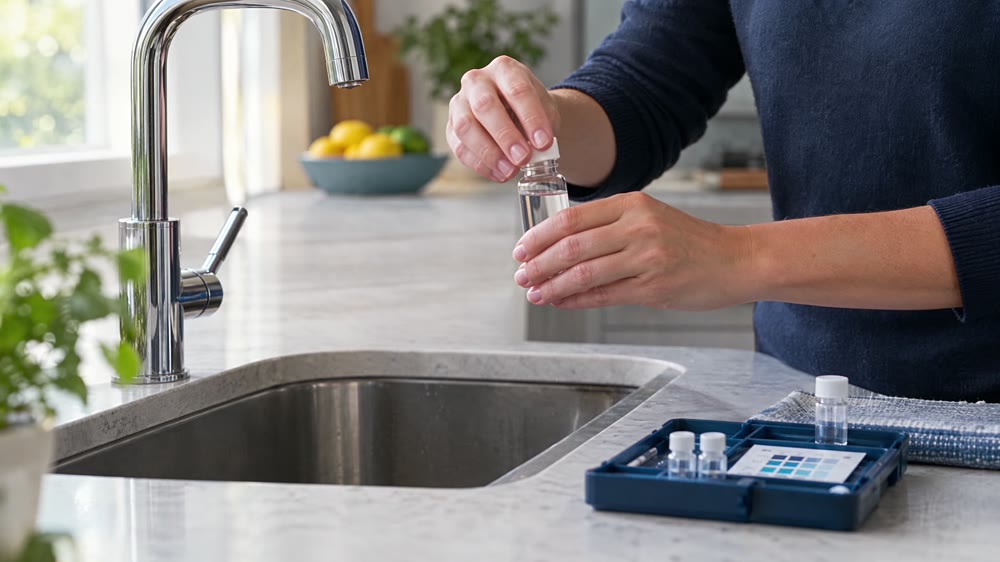
Water problems can feel confusing—hard to see, harder to know what to do about. Before anyone talks about equipment, we find out what’s actually in your water. A simple, no-obligation visit, and the results are yours to keep.
1
We come to you
A trained technician tests your water right at your kitchen sink—about forty-five minutes, no obligation.
2
You get answers
Written results you keep, explaining what your water carries: hardness, iron, chlorine, sulfur, bacteria and more.
A consultation identifies common water-quality issues. Health-related concerns may require specific certified-laboratory testing.
KNOW WHAT YOU’RE STARTING WITH
Find it. Then treat it.
A filter should solve your water problem. The first step is knowing what that problem is.
A generic, one-size-fits-all system treats an average home that does not exist. Yours gets tuned to your actual readings. It is why we are so often called to replace equipment that was never matched to the water in the first place.
We look at your supply, what you’ve noticed, how much water you use and the readings from your water analysis. Hardness, staining, odor and drinking-water concerns may need different treatment.
A consultation can identify everyday water-quality issues. For health-related concerns, ask which certified-laboratory tests are needed. A clear glass and a basic water test do not rule out every contaminant.
FOUR DIFFERENT JOBSSelected for your water. Sized for your needs.
01
SOFTENING / ION EXCHANGE
Hardness out. Comfort in.
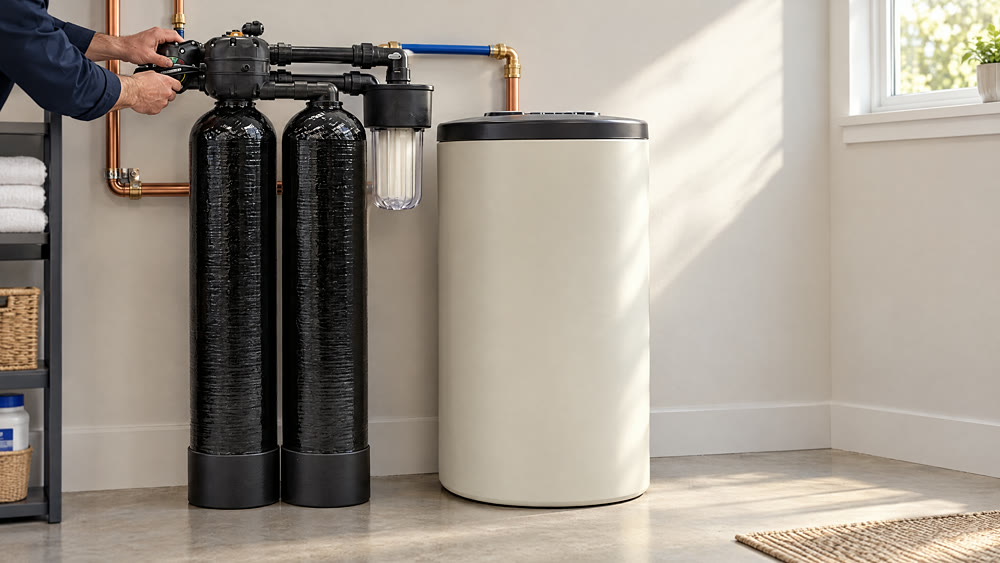
Water passes through resin that exchanges hardness minerals—calcium and magnesium—for sodium or potassium ions. When the resin’s capacity is used, a brine cycle restores it for the next round.
What it addresses
Hardness, scale formation and soap performance.
Where you feel it
Laundry, showering, glassware and water-using appliances.
Softening does not provide comprehensive contaminant removal or disinfection.
02
FILTRATION / THE RIGHT MEDIA
A filter with a specific job.
Sediment filters capture particles. Activated carbon addresses selected taste, odor and disinfectant concerns. Specialty media can treat iron, manganese or hydrogen sulfide when matched to the water chemistry.
What it addresses
The substances the chosen filter is designed to reduce.
Where you feel it
Taste, clarity, odor and staining.
Very fine colloidal clay can pass through basic sediment filters. It needs a treatment approach selected for those particles.
03
REVERSE OSMOSIS / YOUR DRINKING TAP
A finer finish for every sip.
Water pressure drives water through a membrane that reduces dissolved substances. Pretreatment, the membrane and finishing filters work together; a storage tank keeps treated water ready to pour.
What it addresses
Dissolved contaminants covered by the specific system’s performance claims.
Where you feel it
The water you drink, brew and cook with.
Check the model’s certified reductions against your test results. RO performance and output depend on water conditions.
04
ULTRAVIOLET / MICROBIAL TREATMENT
Light at work. Another layer of care.
A UV unit exposes flowing water to ultraviolet light to inactivate susceptible microorganisms. Appropriate pretreatment, flow rate and lamp maintenance are necessary for it to perform as intended.
What it addresses
Microbial concerns within the unit’s validated treatment capability.
What it needs
Electric power, suitable water clarity and scheduled maintenance.
UV does not remove metals or dissolved chemicals. Investigate and correct a contaminated well’s underlying problem as well.
A SOLUTION THAT FITS
The right combination. For your everyday.
At the point of entry.
Whole-home treatment sits where water enters the building. Softening and selected filtration can serve bathrooms, laundry, fixtures and appliances.
At the point of use.
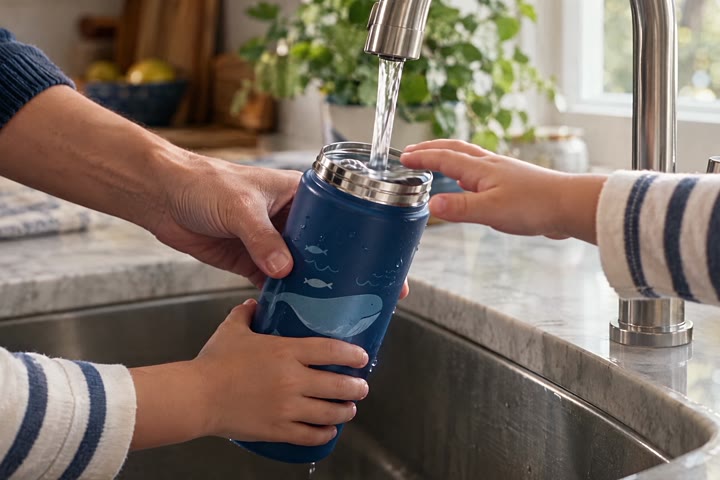
A dedicated drinking-water system focuses treatment on the kitchen tap. It complements whole-home treatment when additional reduction is needed.
Built for your demand.
Household size, plumbing and peak flow all matter. Businesses also need a plan for equipment demands, busy service periods and maintenance access.
THE DIFFERENCE, THROUGHOUT YOUR HOMEFor everyone. In every room.
Where treatment makes a difference.
What you drink. What you wash. What you want to protect.
DRINKING WATER & HEALTH
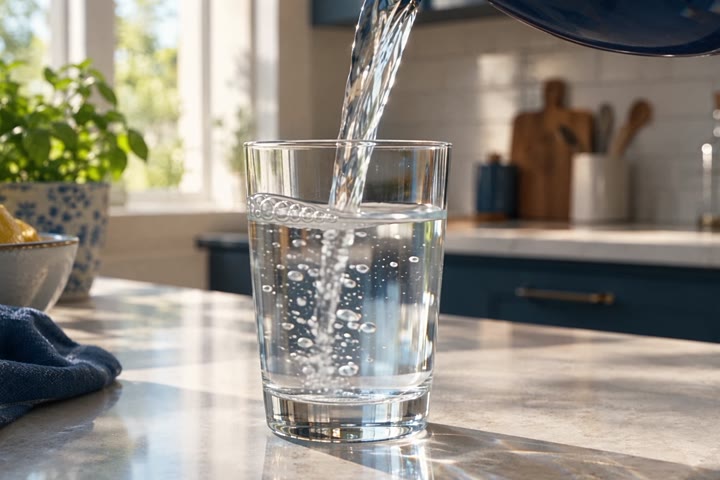
Confidence in every glass.
Better taste makes water more enjoyable. Testing goes further: it identifies concerns you cannot judge by taste or clarity, such as lead, arsenic or nitrate.
Treatment selected and certified for a specific contaminant can reduce exposure to it. A softener addresses hardness; it does not, on its own, make unsafe water safe to drink.
Know what’s in the water used for drinking and cooking. For private wells, ask about bacteria, nitrate and other local concerns—especially when a baby or child joins your household. Infant formula needs water from a safe source; softening alone does not address that.
PETS
Their bowl matters, too.
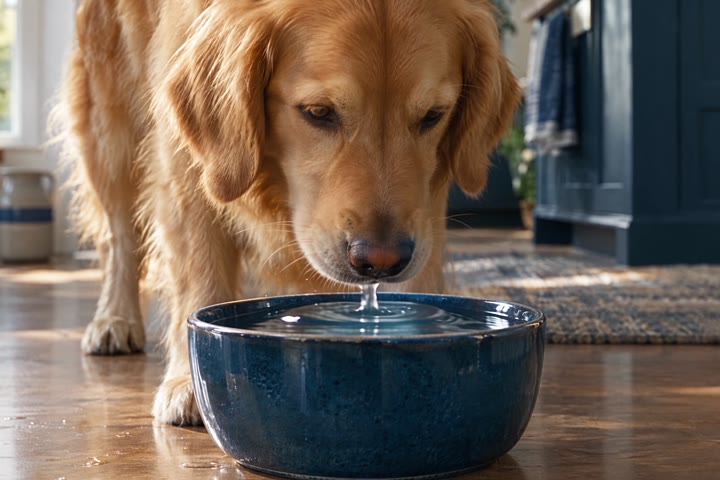
Your pet drinks from the same supply. Include their water bowl in your drinking-water plan. For pets with a prescribed diet or health condition, ask your veterinarian about mineral and sodium needs. Aquarium water needs species-specific preparation.
LAUNDRY
Softer towels. A fresher clean.
Hardness minerals interfere with soap and can leave residue in fabric. Softening helps detergent work more effectively and rinse away more easily. Adjust detergent to your machine’s guidance for soft water.
APPLIANCES
Protect what works hard for you.
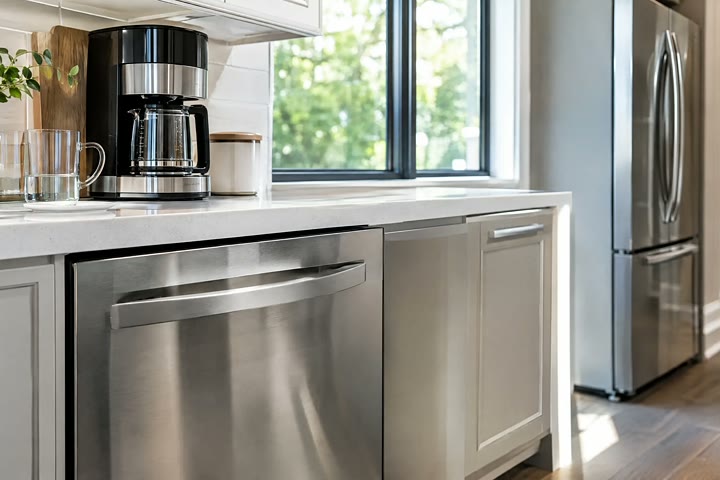
Scale can accumulate inside water heaters, dishwashers and coffee makers. Reducing hardness helps limit new buildup and supports efficient operation. Keep up with each appliance’s maintenance requirements.
FIXTURES, SKIN & HAIR
Less buildup. More everyday comfort.
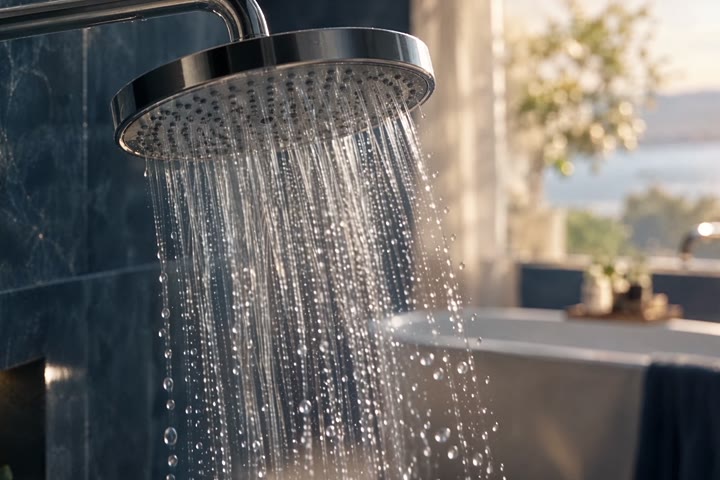
Less mineral residue on faucets, shower doors and glassware. Better soap lather and rinsing for your shower routine. Rust stains and blue-green marks need their own diagnosis—softening is not the answer to every stain.
A FEW GOOD QUESTIONS
Understand your next step.
Do I need every treatment? +
No. Your analysis and priorities determine the combination. For example, hardness and chlorine taste require different treatment functions.
Can I tell whether water is safe by looking at it? +
No. Some contaminants are invisible and have no detectable taste or odor. Use appropriate testing rather than appearance to assess drinking-water concerns.
What happens after installation? +
We explain operation and maintenance, including salt, filters and UV lamps where applicable. Follow-up testing may be needed to confirm treatment of the contaminants identified.
READY WHEN YOU ARE
Now meet the equipment.
You know what each treatment does. See the hardware, features and support behind it.