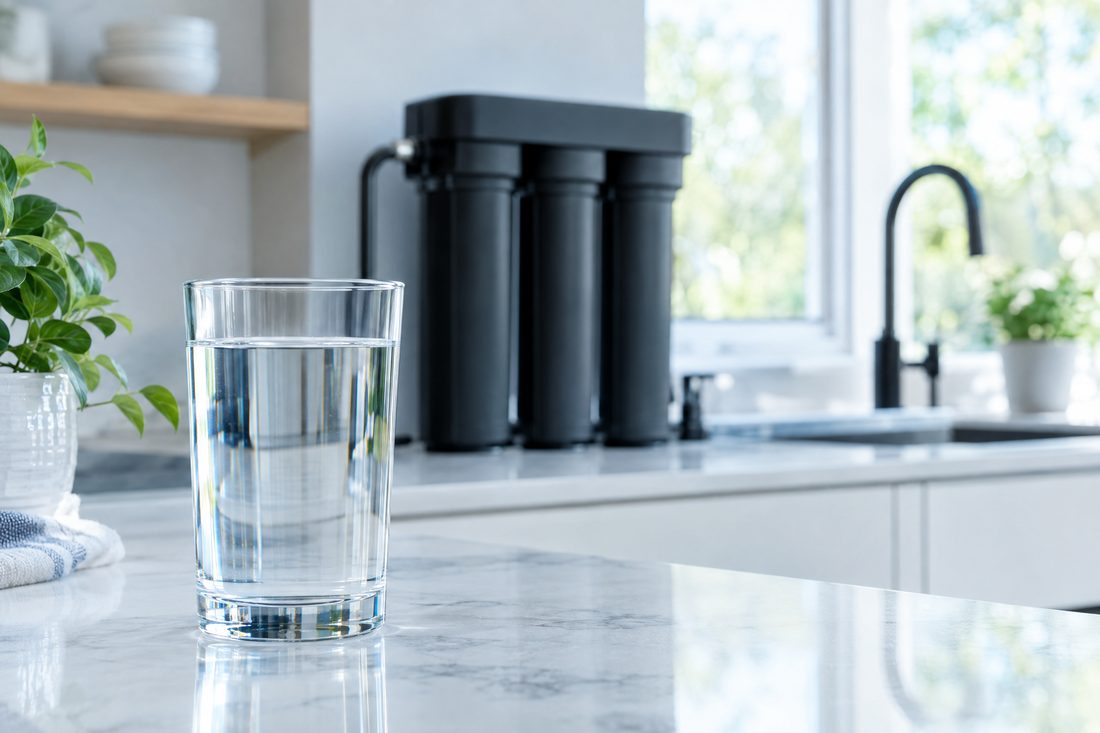
WHAT ARRIVES
Looks like water.
What’s inside?
Hardness. Unwanted taste. Substances you can’t see. Your water’s story starts long before it reaches your glass.
Find the signs in your waterWHAT ARRIVES
Hardness. Unwanted taste. Substances you can’t see. Your water’s story starts long before it reaches your glass.
Find the signs in your waterKNOW YOUR WATER
A water test identifies the issues that matter. The right answers come before the right equipment.
See what a water test tells youTREAT WHAT’S THERE
Softening addresses hardness. Selected filter media target particles, taste, odor and other concerns identified in your results.
Follow the treatment processREFINE THE FINISH
Drinking-water filtration can add targeted contaminant reduction at your kitchen tap. Your needs determine the final combination.
Discover drinking-water filtrationYOUR PERFECT WATER
Better water for your glass, your home and the people you care for. Start with a test. Find the system that fits.
Book a free water testIllustrative treatment story—not a water analysis or a claim of complete contaminant removal.
YOUR WATER / KNOW YOUR STARTING POINT
Spots on a glass. Stains around a drain. A taste you don’t love. Start with what you notice—and make room for what you can’t see.
WHAT’S IN YOUR WATER
Most of what shapes your water never shows up in the glass. Some of it stains and scales. Some of it you’d never taste, smell or see—until a test reveals it. City or well, every home’s water carries its own mix.
Added to disinfect municipal supplies. Often arrives as a pool-like taste and smell at the tap.
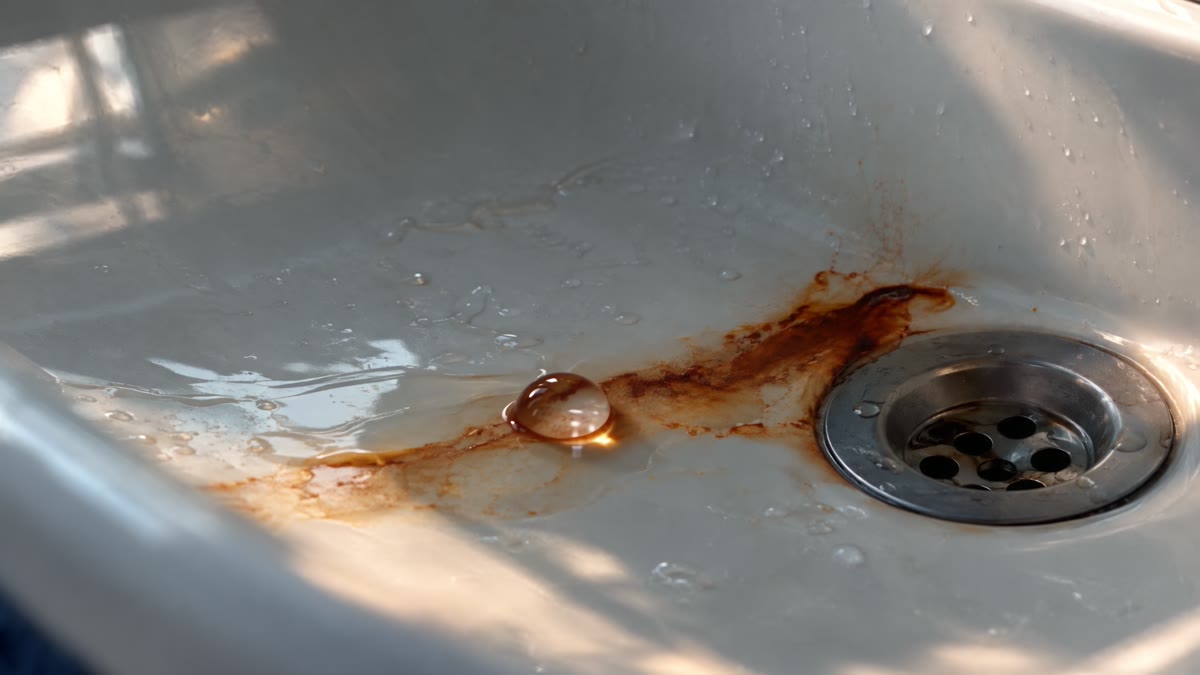
Rust-orange and black staining on sinks, tubs and laundry, with a metallic taste.
Hydrogen sulfide—the rotten-egg smell that can greet you when you turn on the water.
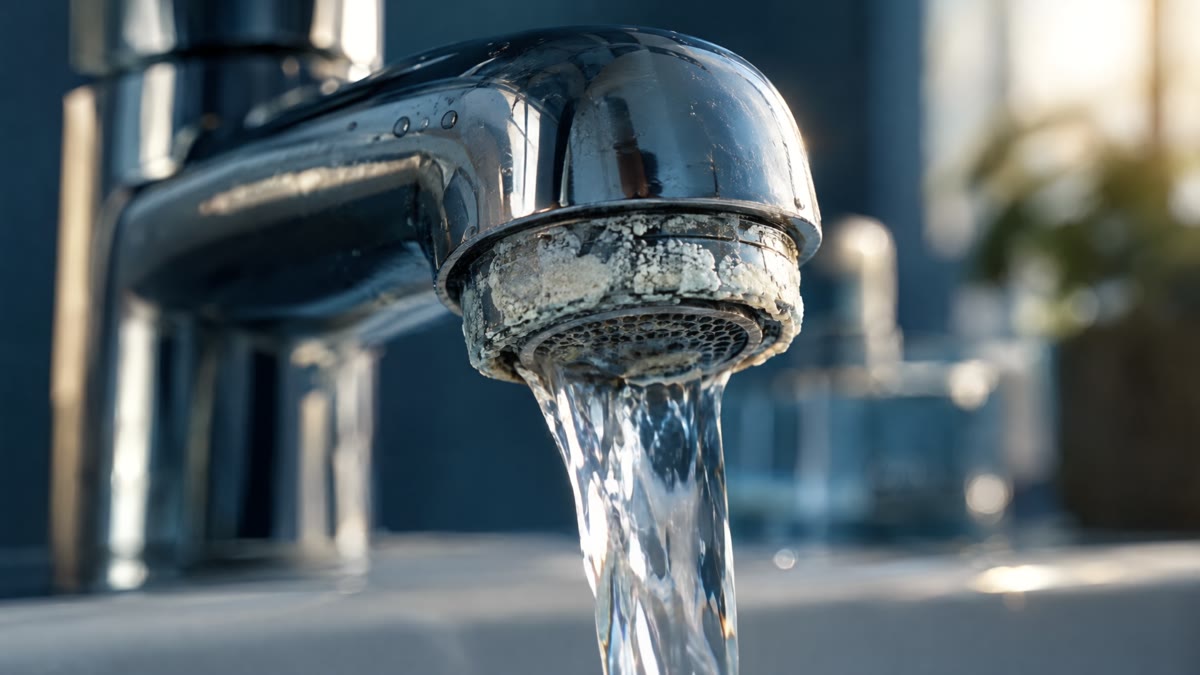
Calcium and magnesium leave scale on fixtures and appliances, spot glassware and stiffen laundry.
Invisible and best found by testing—addressed with ultraviolet disinfection and filtration.
Cloudiness, tannins, arsenic, nitrates and other concerns a certified test can identify.
As a family-owned local company, we start every home with a free in-home test—so your treatment answers your water, not a generic checklist.
Some problems leave a stain. Others have no taste, smell or color. Let’s find what doesn’t belong—and choose the right treatment to reduce or remove it.
Find it. Treat it. Enjoy your water. ↗Hardness minerals leave chalky deposits on fixtures and inside water-using equipment. A hardness measurement helps determine whether a softener would help.
Explore hard water ↗Hard water reacts with soap and can leave residue on fabric and surfaces. Softening addresses the calcium and magnesium behind this problem; results depend on your water and washing routine.
Different colors can point to different causes. Iron and manganese may cause staining; blue-green marks can suggest copper corrosion. Testing the metals and pH helps avoid choosing the wrong fix.
Understand water stains ↗Municipal disinfectants can affect taste and smell. Carbon treatment must be selected for the disinfectant present; chloramine requires appropriate media and contact time.
Explore chlorine & chloramine ↗Air bubbles can cause temporary cloudiness, while fine clay can stay suspended and pass through basic sediment filters. A sulfur smell needs investigation too. The cause determines the media and treatment.
Read about colloidal clay ↗Yes—clear water is not proof of safety. Private-well owners are responsible for testing. Arsenic, nitrate and microbial contamination cannot reliably be detected by looking at a glass. Ask about certified laboratory testing for health-related concerns.
Understand testing for hidden concerns ↗FOLLOW THE SOURCE
Municipal water and private wells call for different questions. Your supply, plumbing and the changes you notice help shape the testing conversation.
BEFORE CHOOSING A SYSTEM
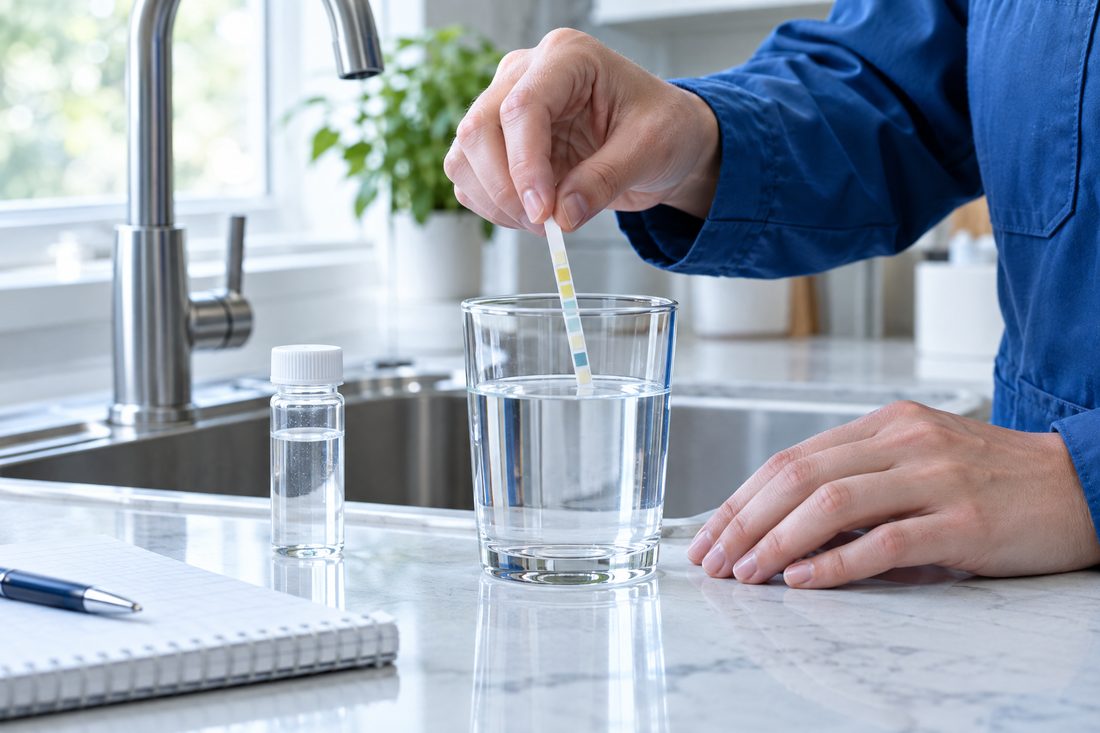
Tell us where your water comes from, what you’ve noticed, and what you want to improve.
Bring any existing water report and details of your current equipment. Ask which measurements are included in the free consultation, what the results mean, and whether additional laboratory analysis is appropriate. Those readings are what a system should be built around, so it targets your contaminants rather than a generic average.
The in-home assessment is a starting point. It does not certify that water is free of every contaminant; health-related concerns can require separate certified-laboratory tests.
Book a free water test ↗YOUR WATER / COMMON QUESTIONS
A few things people ask before booking a free in-home water test.
Clear water is not proof of safety. Some contaminants have no taste, smell or color, and private-well owners are responsible for their own testing. A test is the only reliable way to know what’s actually in your water.
Municipal water is disinfected, but it can still reach your tap with a chlorine or chloramine taste, hardness that scales fixtures, and changes picked up from your own plumbing. A test shows what’s actually at your sink, not at the plant.
Wells raise different questions—iron and manganese staining, sulfur odor, pH and metals, and bacteria. Some health-related concerns such as arsenic, nitrate or microbes require separate certified-laboratory analysis.
Typically hardness, chlorine or chloramine, and pH and metals, with targeted laboratory tests for specific concerns like lead. Ask which measurements are included in the free consultation and what the results mean.
The in-home test is free and no-obligation, and you keep the written results. It’s a starting point for matching treatment to your water—not a complete drinking-water safety certification.
Perfect Water serves Schenectady, Albany, Troy, Saratoga Springs, Clifton Park, Niskayuna and the surrounding Capital Region. If you’re nearby and not sure, call 518.374.9005 and we’ll confirm.
FROM ANSWERS TO ACTION
Explore how softening, filtration and drinking-water systems address different needs.